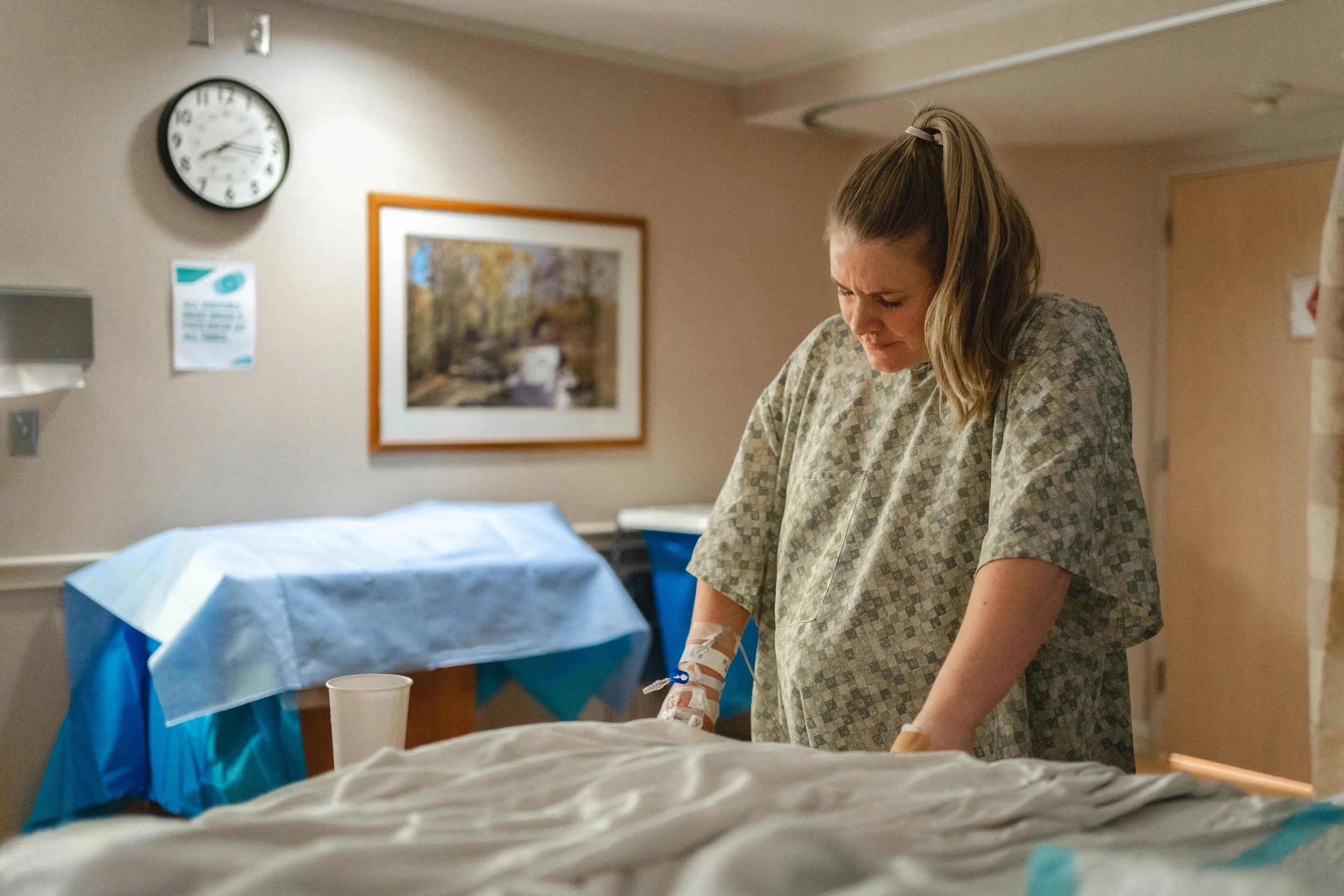
Wondering how you'll cope with contractions is one of the most common worries in pregnancy (you're definitely not the only one!). The good news is you have more options than you might think.
Your options include medications, like an epidural, a spinal block, nitrous oxide, or IV medications, and non-medication comfort measures, like movement, water, massage, counterpressure, breathing, and continuous support. Many people use a mix. There's no "right" choice, only the one that's right for you, and you're allowed to change your mind in labor.
Here's a clear look at each one so you can make a plan that feels right, and stay flexible when labor does its own thing.
Medication options
Epidural
The most common form of labor pain relief in the United States. An anesthesiologist places a thin, flexible tube in your lower back that delivers medicine to numb the lower half of your body. You stay awake and alert, and you'll still feel some pressure.
Good to know: it takes some time to place and start working. It can lower your blood pressure, and some people get itchy. You'll usually have an IV, continuous monitoring, and a catheter, and you'll mostly stay in bed. Many hospitals offer a button so you can give yourself small extra doses as needed.
Spinal block and combined spinal-epidural
A spinal block works fast and gives strong relief for a couple of hours. It's most often used for cesarean births. A combined spinal-epidural gives the fast relief of a spinal with the longer-lasting relief of an epidural.
Nitrous oxide ("laughing gas")
You breathe it through a mask you hold yourself, starting just before a contraction. It takes the edge off and eases anxiety rather than numbing pain, it wears off quickly, and you can usually still move around. Not every hospital or birth center offers it, so ask ahead.
IV or injected medications
Opioid medications can help you relax and rest, especially in early labor. They don't numb pain the way an epidural does, they can cause nausea or drowsiness, and they're usually avoided close to birth because they can make baby sleepy.
Local numbing
A local anesthetic or a pudendal block numbs the vaginal area for birth or for stitches afterward. It doesn't relieve contraction pain.
For more detail on each medication, the American College of Obstetricians and Gynecologists has a helpful guide.
Non-medication comfort measures
Continuous support. Research shows people who have continuous support in labor, like a doula, are less likely to use pain medication and more likely to have a spontaneous vaginal birth.
Movement and positions. Walking, swaying, rocking on a birth ball, leaning forward, or kneeling can ease pain and help labor progress.
Water. A warm shower or a tub in labor can be very soothing. Ask your hospital or birth center what they offer.
Massage and counterpressure. Firm pressure on the lower back or hips can work wonders, especially for back labor.
Breathing and focus. Slow breathing, a calm voice, and rhythm help you ride each contraction.
Heat and cold. A warm compress on your lower back or a cool cloth on your face.
A calm space. Dim lights, music, your own pillow, and as few interruptions as possible.
TENS. A small device with sticky pads that sends gentle electrical pulses. Some people find it helpful in early labor.
Acupressure. Some people find pressure on specific points calming. Check with your provider before trying acupuncture.
Questions to ask your hospital or birth center
When can I get an epidural, and is an anesthesiologist always available?
Do you offer nitrous oxide?
Can I use a tub or shower in labor?
Can I move freely and use a birth ball or peanut ball?
How many support people can be with me, including my doula?
Your birth, your way
You don't have to decide everything ahead of time. Many families plan to start with comfort measures and keep medication on the table. Others know from day one they want an epidural. Both are great plans. Writing down your preferences helps (here's why a birth plan matters), and so does learning comfort techniques together in our 3-in-1 Childbirth Education Class.
How a doula helps with pain
Whether you're planning an unmedicated birth or an epidural, a doula helps you stay comfortable and confident: suggesting positions, giving counterpressure, guiding your breathing, coaching your partner, and helping you understand your options as labor unfolds. With our birth doula support, your doula is with you continuously from active labor until your baby is in your arms. Still weighing where to give birth? Here's our guide to choosing between a home birth, birth center, and hospital. We're on your team, forever.
This article is for education, not medical advice. Talk with your OB, midwife, or anesthesiologist about the right pain relief options for you.